Dark Souls, developed by FromSoftware and released in fall 2011, is a masterpiece that has challenged all who’ve interacted with it’s complex narrative. As one of the most arduous gaming experiences produced in recent history, FromSoftware’s dark fantasy and successor to Demon’s Souls remains an enduring and beloved journey.
As players explore the game world on their own, learning how to move and fight without any tutorials, they become an active participant in assembling the reality and history of Lordran. Though the game’s overt focus is on the player-character’s journey and overcoming the challenges that await beyond the Undead Asylum, the personalization of the experience comes in a myriad of forms—from weapons and armor to combat and exploration. Players willing to immerse themselves in this world will discover one of the most intricately detailed and complex narrative environments in gaming.
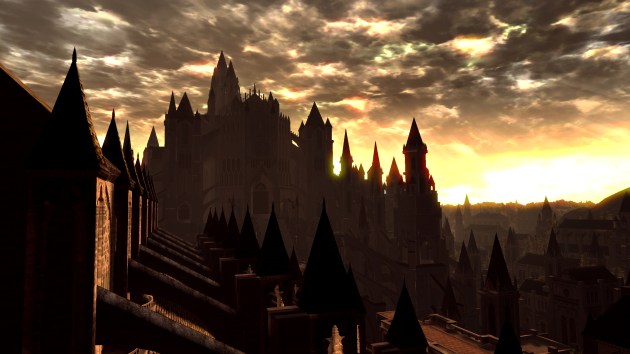
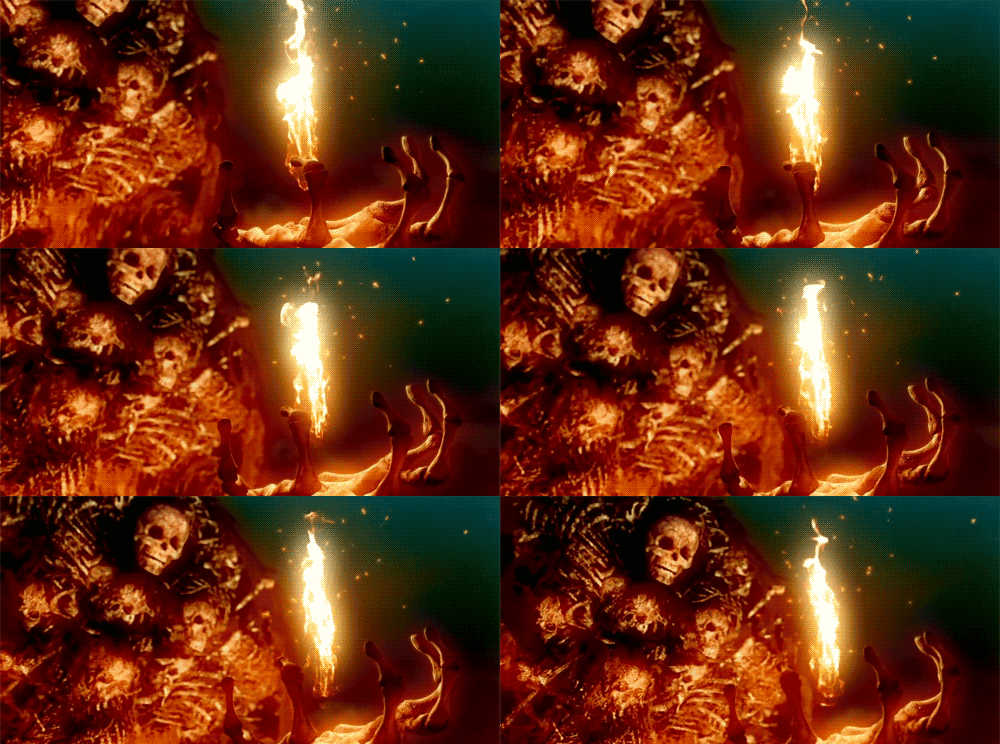
The fictional world Dark Souls takes place in opens with the “Age of the Ancients,” a time period where the world was vast, barren, and ruled over by everlasting dragons—impossibly ancient beings whose scales granted them immortality. Within the bosom of the earth a fire is eventually born. From this first flame, four Lord Souls were discovered, each granting immense power. The soul of death was found and claimed by Gravelord Nito, First of the Dead. The power of the soul transformed Nito into a creature embodying death, decay, and disease—a great mass of skeletons held together by the miasma of his Lord Soul.
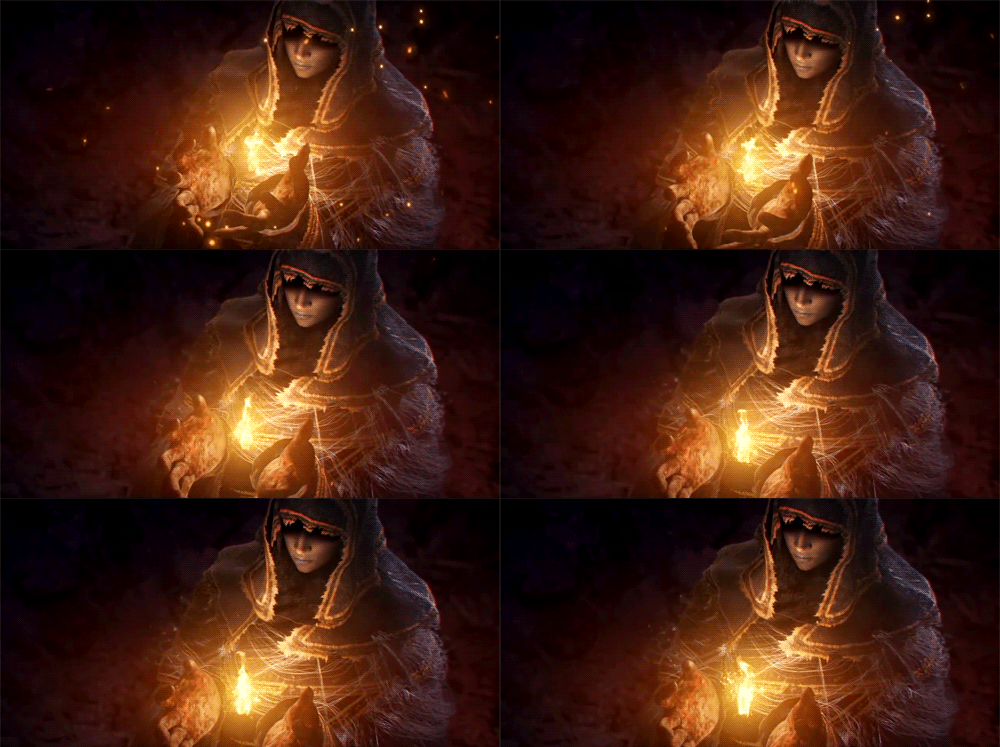
The Witch of Izalith, granted the power of fire, became the owner of the soul of life. With it she invented flame sorcery, the original art of weaving flames to one’s will.
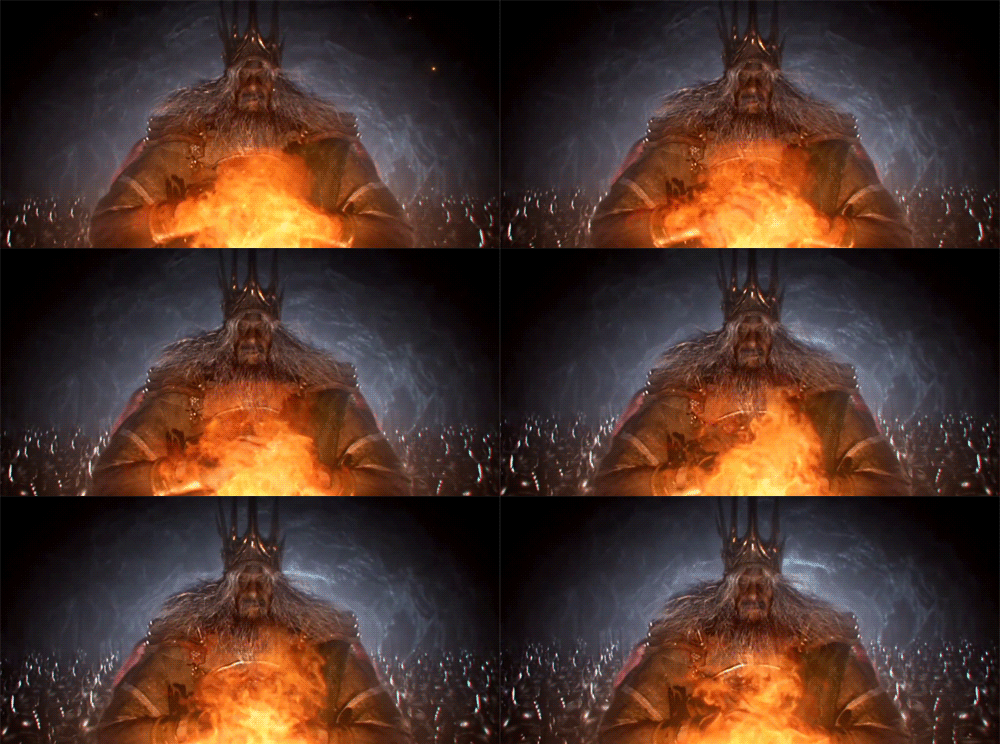
Gwyn, the Lord of Sunlight, seized the soul of light. With it, Gwyn came to wield the divine power of Miracles and a deific dominion over lightning and light.
The final soul, the eponymous Dark Soul, was found by an individual known as the Furtive Pygmy. Weaker than the other Lords, the Furtive Pygmy is overlooked and forgotten; however, his soul is unique in its own way. Eventually splitting it into countless fragments, he would become the progenitor of humanity.

With the help of Seath, a scaleless dragon turned against his kin, the three Lords sought sovereignty over the world. Armed with Seath’s knowledge the Lords began their war against the ancient dragons. Gwyn and his knights hurled spears of lightning, shattering their scales under their onslaught—rendering them mortal. The Witch of Izalith and her daughters conjured a series of firestorms and destroyed the great trees that once housed their enemy. And Nito, in-turn, unleashed death and disease on the weakened dragons until their bodies crumbled away. On the precipice of a golden era, the Lords rebuilt and prospered. Thus began the “Age of Fire”—their age—and all this is divulged in the game’s opening cinematic.
As one of the cursed undead, you’ve been incarcerated with your Hollowed brethren. Though it is unclear how long your character has been imprisoned in the Undead Asylum, you’re rescued by Oscar, a knight of Astora, who pushes a corpse down into your cell bearing a key used to make your escape.
Like the player, Oscar is also afflicted by the curse of undeath. He is later found dying and asks the player to listen to his story before he go hollow himself. Should the player grant the knight’s request, he recounts the legend of the Chosen Undead, a tale passed down through his family.

Upon finishing his dialogue Oscar is relieved and will give the player an Estus Flask (the game’s main healing item) and a key to progress farther into the Asylum. He bids players farewell, thanking you for inheriting the quest he was unable to complete himself.
The player’s own pilgrimage through Lordran is fraught with difficulty, unforeseen challenges, and intricate lore. Discovering what’s really going on is a matter of curiosity, and exploring off the beaten path. Item descriptions, cut-scenes, and in-game dialogue each offer tiny glimpses of lore, assembling the true narrative while never pulling players out of the game world. Dialogue is always brief, never more than a few lines, which is only expounded upon should the player repeatedly communicate with a character. FromSoftware crafted the story as a mystery left to be a solved, a game to beaten to its fullest.
This interactive medium makes uncovering the full story of a Souls game a game in itself, requiring engagement from the player to appreciate the game’s deeper narrative and lore. It comes down to the player to not only make it throughout the game to learn its ending, it’s also up to the player to make decisions about important questions that are intrinsic to the player’s search for truth.
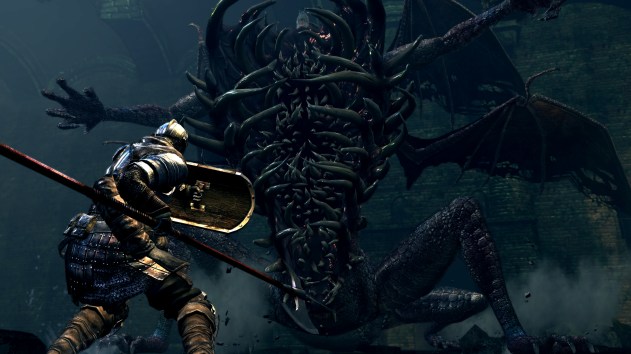
The story of Chosen Undead and the world of Lordran remain a storytelling experience best faced as the player— investigating item and weapon descriptions, traversing the expansive and varied game world, and surmounting the challenges of Lordran as you meet them.
This sense of exploration in-game, within a fantastical world rich with things long forgotten, makes Dark Souls such a brilliant and enduring piece of art in gaming.
Feel free to comment below about your experience with the Souls series and which in-game moments have lived on with you after your first play through.

 StoryMode